
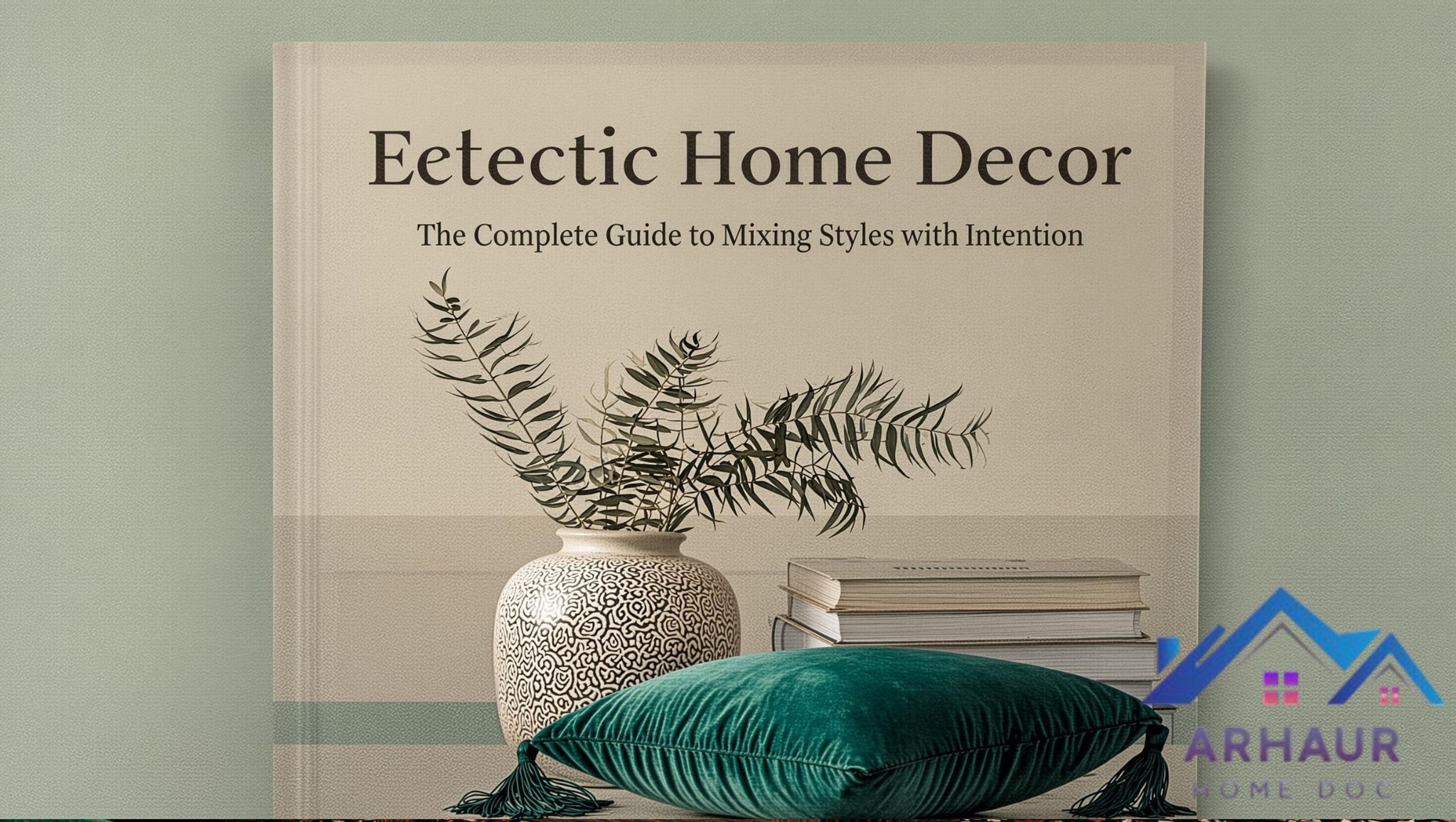
Eclectic Home Decor: The Complete Guide to Mixing Styles with Intention
Walk into a truly eclectic home and you feel it before you can describe it — warmth, personality, the sense that every object has been chosen because it meant something. That feeling isn’t accidental. It’s the result of carefully orchestrated creative freedom.
In This Guide
- What Is Eclectic Home Decor?
- The 7 Core Principles
- Mastering Color in an Eclectic Home
- Mixing Furniture Styles
- Layering Texture and Pattern
- Room-by-Room Eclectic Decor Ideas
- Common Mistakes to Avoid
- Frequently Asked Questions
What Is Eclectic Home Decor?
Eclectic home decor is the practice of combining elements from different design periods, cultural traditions, and personal histories into a single, cohesive living space. The word itself comes from the Greek eklektikos, meaning “selective” — and that selectiveness is exactly what separates a sophisticated eclectic interior from a cluttered one.
It is not a single aesthetic like mid-century modern or Scandinavian minimalism. Rather, eclectic decor is a methodology: take the best from everywhere, edit ruthlessly, and unify through intention. A Victorian chaise longue beside a raw-edge walnut coffee table. A Moroccan rug grounding an otherwise contemporary living room. A gallery wall that mixes oil portraits with abstract prints and a mounted fern specimen.
“Eclectic design is not chaos. It is a purposeful personality — an orchestra of narratives by means of design.”— Olivia Marett, interior designer
In 2025 and 2026, eclectic design has surged in popularity as homeowners push back against the sterile uniformity of mass-produced interiors. People want their homes to tell a story — their story.
Quick Definition
Eclectic home decor = deliberately mixing multiple design styles, periods, and cultural influences within a single space, unified by a consistent color palette, focal point, or underlying theme.
Eclectic vs. Bohemian vs. Maximalist: What’s the Difference?
Bohemian (boho) decor shares DNA with eclectic design but skews toward a specific mood — earthy, free-spirited, and globally influenced, with strong nods to natural materials, macramé, and layered textiles. Eclectic design is broader; it can be entirely boho, or not at all.
Maximalism is about abundance and visual density. An eclectic interior can be maximalist, but it doesn’t have to be — a room with just five thoughtfully chosen pieces from five different eras is still eclectic. The defining quality is stylistic diversity, not quantity.
The 7 Core Principles of Eclectic Interior Design
The apparent freedom of eclectic design is built on a hidden scaffolding of rules. Ignore them and a space tips from collected to cluttered. Follow them and everything — even the most unexpected pairing — snaps into place.
- Start with a unifying element Every successful eclectic space has one thread that runs through everything — a consistent color, a repeated material, a shared mood. It might be warm-toned metals appearing in both the lighting and drawer pulls, or a dusty rose that shows up in the rug, a single throw pillow, and a framed print. Without this anchor, the room has no rhythm.
- Choose a hero piece first Pick one bold item to anchor each room — a statement rug, an oversized piece of art, a commanding piece of furniture. Every subsequent decision should relate back to this piece in some way. It is the first sentence; everything else is the paragraph that follows.
- Mix eras, not aesthetics at random Combine pieces from different historical periods with intention. A mid-century sofa with a rustic coffee table works because both have clean silhouettes. A baroque gilded mirror above a brutalist concrete shelf works because the contrast is deliberate. Random mixing without logic reads as disorder.
- Vary scale dramatically Play with proportion. Oversized art above a small console. A tall floor lamp beside a low sofa. Large plants next to delicate ceramic objects. Scale contrast creates visual energy and prevents a room from feeling flat or safe.
- Layer texture more than color Texture is the quiet workhorse of eclectic interiors. Velvet cushions beside rattan furniture beside a linen throw — all in the same neutral palette — create richness without visual noise. Limit bold color to a few key moments; let texture do the heavy lifting everywhere else.
- Edit as ruthlessly as you curate An eclectic home is not a storage unit. Every single object should earn its place — practically, emotionally, or aesthetically. If you find yourself justifying why something is in a room, it probably shouldn’t be.
- Build it slowly The best eclectic interiors accumulate over years, not weekends. A piece from a market in Lisbon. Your grandmother’s lamp. A painting you saved up for. Authenticity cannot be purchased all at once — it builds up like sediment, layer by patient layer.
Mastering Color in an Eclectic Home
Color is simultaneously the most powerful and the most treacherous element in eclectic decor. Get it right and a wild mix of styles feels harmonious. Get it wrong and even beautiful individual pieces fight each other.
The Neutral Foundation Strategy
The most reliable approach: keep walls and large upholstered pieces in a relatively neutral palette — warm whites, soft taupes, aged linen tones — then introduce saturated color through accents. This gives your eclectic objects room to breathe and prevents the space from becoming visually exhausting.
Pro Tip
Warm-toned neutrals (cream, ecru, greige) are more forgiving than cool grays when mixing varied furniture styles. Warm neutrals act as a gentle unifier; cool grays can make disparate pieces feel even more disconnected.
Choosing Your Accent Colors
Select two or three accent colors and repeat each of them at least three times across the room — once large, once medium, once small. For example: a terracotta lamp, a terracotta-toned print in the gallery wall, and terracotta-glazed vases on a shelf. Repetition creates rhythm; rhythm creates cohesion.
Jewel tones — emerald, sapphire, amber, plum — are particularly effective in eclectic spaces because they have enough visual weight to hold their own against diverse furniture styles. A single emerald velvet armchair can anchor an entire room.
Warm vs. Cool: Staying in Your Lane
Even within a diverse color palette, consistency in undertone matters. A room of warm-toned pieces — amber, terracotta, forest green, aged gold — feels naturally harmonious. Introduce too many cool-toned elements (icy blues, sharp whites, chrome) and the warmth collapses. Decide early which side of the temperature spectrum your home leans toward, then let that decision guide individual purchases.
Mixing Furniture Styles Like a Designer
Furniture is where eclectic design either sings or stumbles. The golden rule is deceptively simple: mix silhouettes, not visual weight. A delicate cane-back chair sits comfortably beside a substantial leather sofa because they occupy different visual registers. Two equally heavy, equally ornate pieces from different eras will clash.
Successful Combinations
Some furniture pairings that consistently work in eclectic homes:
- Mid-century modern + rustic farmhouse The clean, low-slung lines of mid-century furniture provide a grounding contemporary feel, while rough-hewn wood and natural stone accents add warmth and texture. Think: a walnut credenza with a ceramic table lamp and a rough linen curtain.
- Victorian antique + industrial modern The ornament of Victorian pieces gains an unexpected edge when set against raw metal, exposed brick, or utilitarian shelving. The contrast makes each style more interesting by virtue of what it’s placed beside.
- Bohemian global + minimalist Scandinavian Richly patterned global textiles and handcrafted objects from Morocco, India, or Japan feel grounded and intentional when the surrounding furniture is clean and understated. The minimalist backdrop lets the statement pieces shine.
Designer Insight
Always mix contemporary pieces with your vintage finds. It prevents the space from reading like a museum or a period room, and signals that the eclectic look is the result of deliberate choice rather than accumulated time.
Layering Texture and Pattern
If color unifies and furniture provides structure, texture is what makes an eclectic room feel genuinely alive. Touch is as important as sight in the experience of a home — the satisfying weight of a velvet cushion, the roughness of a hand-thrown ceramic, the softness of a worn kilim underfoot.
The Texture Hierarchy
Build texture in three layers. The first is the largest and most structural: rugs, upholstery, curtains. These should be the richest and most enveloping. The second layer is furniture surfaces and wall treatments — woven cane, raw timber, limewash paint. The third layer is the smallest: objects, books, ceramics, plants. This is where you experiment most freely.
Mixing Patterns Without Chaos
Pattern mixing is one of the more intimidating aspects of eclectic decor, but it follows a simple logic: vary the scale. A large geometric rug can live happily with medium-scale floral cushions and a small-print throw because each operates at a different visual frequency. The eye can rest between them.
A second reliable rule: anchor bold patterns with solid planes. If your statement rug is densely patterned, the sofa above it should be a solid. If the cushions are printed, keep the bedspread plain. Balance in pattern comes from giving the eye somewhere quiet to land.
The Pattern-Mixing Rule
One large pattern, one medium pattern, one small or geometric pattern per room. Always balanced with solid surfaces. When in doubt, start with fewer patterns and add — it’s easier than removing.
Room-by-Room Eclectic Decor Ideas
Each room offers a different canvas and calls for slightly different strategies. Here’s how to approach the main spaces in your home.
🛋
Living Room
The living room is your main eclectic canvas. Start with a statement sofa in a solid, rich fabric. Layer a bold patterned rug beneath it. Build a gallery wall that mixes frame styles and subject matter. Add one unexpected lighting element — a sculptural floor lamp that looks out of period with everything else.
🛏
Bedroom
Keep the bed itself relatively calm — a solid linen bedhead, neutral bedding — then go bolder with bedside tables that don’t match, a reading lamp with character, and a mix of art that includes something personal. The bedroom benefits from a softer, more intimate version of eclecticism.
🍽
Dining Room
Mix dining chairs — same height at the table, different styles in the seats. Pair a modern table with vintage chairs, or vice versa. A statement pendant light above the table is non-negotiable. Eclectic dining rooms also love a mix of glassware and ceramics that vary in origin and age. Here you can know about arhaur house.
🪴
Entryway
The entryway sets the promise of what follows. A vintage console, a contemporary mirror, and an oversized plant signal eclectic confidence immediately. Use the entryway to introduce your bolder color or pattern choices — it’s a transitional space that can bear more drama than others.
🚿
Bathroom
Eclectic bathrooms often succeed through a single statement piece: a Victorian clawfoot tub, a hand-painted sink, or unusually colored tile. Keep surrounding elements simpler so the focal piece commands the room. Warm metals — brass, bronze, unlacquered copper — bridge diverse styles beautifully.
📚
Home Office
The home office is a natural habitat for eclecticism. Books themselves create texture and depth. Mix a modern desk with a vintage leather chair. Pin a mix of reference images, prints, and mementos on a corkboard. Let the room reflect the way your mind works: associative, layered, personal.
Common Eclectic Decorating Mistakes to Avoid
The most common failure of aspiring eclectic interiors isn’t too much boldness — it’s too little intention. Here are the specific mistakes that turn “collected and curated” into “chaotic and cluttered.”
Buying everything at once
Eclectic interiors that were assembled on a single weekend shopping trip always look it. The best eclectic homes have pieces that arrived at different times, from different places, with different stories. If you’re furnishing from scratch, buy the most important pieces first and fill in over months and years.
Ignoring scale relationships
A room of uniformly sized objects — all medium, all at eye level — feels boring regardless of stylistic diversity. Introduce drama through scale: one thing much larger than you think you need, one thing much smaller, one thing unexpectedly near the floor.
Over-lighting with a single overhead source
Overhead lighting flattens a room and erases the very shadows that make eclectic interiors feel cozy and dimensional. Layer your lighting: a floor lamp in one corner, a table lamp low on a side table, sconces at mid-height, perhaps a pendant. Varied light heights create variety of mood and texture across the day.
Neglecting negative space
Even the most maximalist eclectic room needs breathing room. A wall with nothing on it, a surface with just one object, an empty corner with only a plant — these pauses make the populated areas read as intentional rather than compulsive.
Confusing personal with private
An eclectic home should feel personal, but not every personal item needs to be on display. Edit your memorabilia: one meaningful object from a meaningful trip, not every souvenir from every trip. The restraint makes each remaining piece more powerful.
The Edit Test
Stand in your room and look for the thing that is trying hardest to be noticed. If it’s working too hard — too bright, too large, too insistent — remove it for a week and see if the room breathes better without it.
Frequently Asked Questions
How do I start decorating in an eclectic style if I’m starting from scratch?
Begin with one room and one anchor piece you love deeply — something with strong character and personal meaning. Choose your wall color (a warm neutral is safest to start). Then add furniture that relates to your anchor piece in color, mood, or material. Buy slowly, and resist the urge to complete the room in a single session. The gaps are part of the process.
Can eclectic design work in a small apartment?
Absolutely — and often better than in large homes. Small spaces benefit from eclectic design’s emphasis on personality over scale. In a compact apartment, one excellent piece from an unexpected era or culture has far more impact than a matching set. Focus on vertical space (tall bookshelves, high-hung art) and layer textiles to create richness without bulk.
What is the difference between eclectic style and just “messy”?
The difference is intention and a unifying principle. A messy room has objects that don’t relate to each other and no visual logic to their arrangement. An eclectic room has objects from different worlds that are connected by color, material, mood, or personal meaning — and where placement has been considered. If you can articulate why each object is there, it’s eclectic. If you can’t, it might just be clutter.
Is eclectic decor expensive?
Eclectic decor can actually be one of the most budget-friendly approaches to interior design precisely because it embraces vintage, thrifted, and inherited pieces. A secondhand market, an estate sale, a grandmother’s attic — these are primary sources, not afterthoughts. The investment is time and discernment, not necessarily money.
What are the best places to find eclectic home decor pieces?
Estate sales and estate auctions offer genuine vintage pieces at fair prices. Antique markets and flea markets reward regular attendance — the best items go fast. Charity shops and thrift stores in wealthy neighborhoods often stock high-quality donations. Independent ceramicists, textile artists, and craftspeople offer handmade pieces that feel genuinely singular. And of course, travel: objects brought home from other countries carry a story that factory-produced decor never can.
Key Takeaways
- Eclectic home decor is about purposeful mixing — not random accumulation. Every piece should relate to a unifying element, whether that’s color, material, mood, or meaning.
- Start every room with one hero piece and build outward from it. This gives the space a center of gravity.
- A warm neutral wall and floor palette lets eclectic objects breathe. Reserve bold color for accent moments repeated in threes.
- Mix furniture by silhouette, not visual weight. Vary scale dramatically — at least one piece much larger, one much smaller, than feels comfortable.
- Layer texture in three tiers: structural (rugs, upholstery), surface (furniture finishes, wall treatments), and object (ceramics, plants, books).
- Mix patterns by varying scale: one large, one medium, one small or geometric — always balanced with solid surfaces.
- The best eclectic rooms are built slowly. Time is what gives them the quality of authenticity that cannot be bought all at once.
- Edit ruthlessly. Negative space and empty surfaces give the eye somewhere to rest, which makes the populated moments more powerful.